
Associate Professor Nandi Siegfried
Chief Specialist Scientist
Mental Health, Alcohol, Substance Use and Tobacco Research Unit (MASTRU)
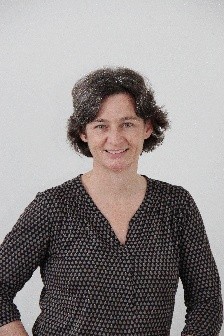 Nandi Siegfried is a Chief Specialist Scientist who works part-time in the Mental Health, Alcohol, Substance Use and Tobacco Research Unit at the South African Medical Research Council. She trained as a public health physician and clinical epidemiologist, and her work focuses on systematic reviews, the quality and conduct of clinical trials, and strengthening how evidence is used to inform clinical and public health guidelines and policy. Her focus includes HIV and infectious diseases, alcohol harms, and opioid use, and where these intersect.
Within the unit, Nandi provides methodological support to colleagues, helping to strengthen the quality and rigour of research. She established and leads the monthly journal club, which creates space for discussing bias in research and building critical appraisal skills in a supportive, collaborative way.
Alongside her role at the SAMRC, Nandi consults independently in the public health space. She has worked with more than 30 World Health Organization Guidelines Development Groups in roles ranging from technical adviser to chair and methodological facilitator. She holds an honorary Associate Professorship at the University of Cape Town.
| What inspired you to become a clinical epidemiologist? |
|
As clinicians, we have a responsibility to base our decisions on the best available evidence. Early in my career, I was struck by how differently colleagues approached managing the same condition. It raised questions for me that I didn’t yet have the language to express—what I was really looking for was epidemiology and the lexicon of evidence synthesis. Through studying epidemiology, and particularly through my long involvement with Cochrane, I developed a much clearer understanding of what evidence-based practice can and should look like. Evidence alone is not always sufficient to shift policy. South Africa’s mismanagement of the HIV epidemic in the early years is a sobering reminder of that. To really make a difference, we also need to understand health systems and the broader evidence ecosystem. Much of our work at MASTRU is aimed at engaging across that full evidence-to-practice pathway. |
| Are there any exciting projects you’d like to share right now? |
| I am a partner in a Wellcome-funded project to evaluate a novel method of tracking carbon emissions in clinical trials, with a focus on how it could be applied and adapted locally. I’m collaborating on this with colleagues from the SAMRC’s HIV and Infectious Diseases Research Unit. It has relevance across the SAMRC, especially for teams running trials. It is also a useful reminder that “first, do no harm” applies not only to patients, but also to our planet. |
| A bit more personally |
| I’m married, with one grown-up daughter and one almost-grown-up son. Outside of work, I enjoy cooking and baking—and I’m always grateful for a dishwasher. |