
Prof Jill Hanass-Hancock
Chief Specialist Scientist
Gender and Health Research Unit (GHRU)
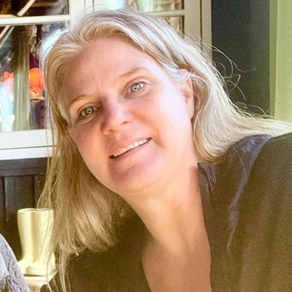 Over the past decades, Professor Jill Hanass-Hancock’s research has centred on advancing sexual and reproductive health and rights (SRHR) for vulnerable populations in Southern Africa, including women, adolescents, young people, and persons with disabilities. She is internationally recognised for her pioneering contributions to understanding the SRHR needs of people with disabilities, drawing on a wide range of interdisciplinary methods such as ethnography, epidemiology, disability statistics, arts-based research, situation and policy analysis, and the design, piloting, and evaluation of tailored interventions in the health and education sectors. A defining feature of her work is its strong emphasis on translating research evidence into policy and practice.
Professor Hanass-Hancock’s earlier research significantly advanced understanding of the heightened vulnerability of women with disabilities to HIV and gender-based violence, the increased risk of disability among people living with HIV, and innovative approaches to measuring the economic cost of disability. Her work on the cost of disability was recognised as among UNICEF’s best research outputs in 2016. Building on this foundation, she has led the development of several inclusive interventions aimed at improving accessibility and equity in SRHR service delivery.
 Among her most well-known contributions is the Breaking the Silence approach to comprehensive sexuality education (UNESCO good practice), which applies universal design for learning to ensure that young people with disabilities can access information and acquire the skills needed to claim their SRHR. She also developed the Disability Awareness Toolkit (DAT), a practical method for assessing the accessibility of health and post-gender-based violence clinical services and identifying feasible, context-specific solutions.
|
"Disability research is important because it provides the evidence needed to reduce inequality, improve inclusive services, inform policy and resource allocation, uphold human rights, and ensure that people with disabilities are visible and meaningfully included in development, health, and social systems". |
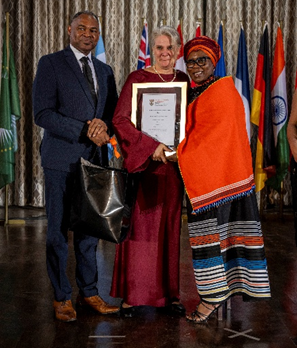
Several of Professor Hanass-Hancock’s research initiatives have had direct and measurable policy impact. Notably, the Forgotten Agenda project, which examined the sexual and reproductive health needs of women with disabilities during the COVID-19 pandemic in South Africa, informed the country’s National Strategic Plan on HIV, TB and STIs and received the Discovery Award for Policy Translation at the 2023 South African AIDS Conference. Similarly, the Disability Data Initiative (DDI) has played a leading role in cataloguing and analysing disability data to support inclusive policy development, practice, and monitoring, an approach that has since been adopted by the World Bank Disability Data Hub. For this pioneering work, she received the 2025 South African Women in Science award.
| What inspired your career in studying disability in Africa? |
| My motivation to pursue disability research emerged from recognising the systematic exclusion of people with disabilities, particularly women with disabilities, from HIV, health, and broader development responses in Southern Africa, alongside a profound lack of evidence to inform inclusive policy and practice. This exclusion was reinforced by persistent misconceptions that people with disabilities constitute a small, low‑risk population unworthy of research investment. In my first research post, I was explicitly told that people with disabilities made up no more than 1% of the population and were therefore not important enough to warrant attention within HIV prevention and treatment. Subsequent research has disproven these assumptions, demonstrating that people with disabilities account for at least 16% of the global population, experience a life expectancy gap of up to 20 years, and that women with disabilities face at least double the risk of intimate partner violence and HIV compared to women without disabilities. |
| Why is it important to study disability in Africa? |
|
Yet disability and people with disabilities are frequently invisible in data and decision-making. Research is therefore essential to understand lived experiences, identify context-specific barriers to inclusion, and design services, policies, and development programs that are equitable, accessible, and culturally relevant. Studying disability in Africa also supports the realisation of human rights, strengthens accountability to international commitments such as the UN Convention on the Rights of Persons with Disabilities and the SDGs, and ensures that people with disabilities are not left behind in development, humanitarian responses, and social transformation. |
| Some personal information |
| I am married to Bradley Hancock, an entrepreneur. I have two sons, Tristan and Josh, who are in their early 20ths. I enjoy swimming, hiking and yoga. |
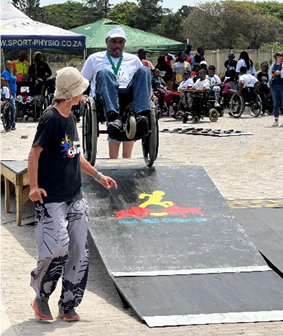 Studying disability in Africa is important because it reveals how disability intersects with poverty, gender, health, education, and inequality in contexts shaped by colonial histories, weak service systems, and rapid social change, and because African realities are often under-represented in global evidence and policy debates. On the one hand, Africa has a high and growing prevalence of disabling health conditions due to factors such as infectious diseases, conflict, road traffic injuries, limited access to health care, and the impacts of climate change. On the other hand, disability is experienced when a person with impairments experiences attitudinal, communication or physical barriers that hinder people with disabilities from participating in society on an equal basis with others, shaping inequalities in health, education and wellbeing.