
Prof Julia H. Goedecke
Chief Specialist Scientist
Biomedical Research and Innovation Platform (BRIP)
 Prof Julia H. Goedecke is a Chief Specialist Scientist at the South African Medical Research Council, where she leads research on obesity and type 2 diabetes within BRIP. She holds honorary professorships at both the University of Cape Town and the University of the Witwatersrand and is also a Guest Professor at Umeå University in Sweden.
Her research focuses on the determinants of non-communicable disease (NCD) risk in African populations, using a multidisciplinary approach to understand how genetic, molecular, physiological and lifestyle factors interact to influence health. A major focus of her work is on elucidating how type 2 diabetes presents differently in populations of African ancestry compared to those of European ancestry. This includes investigating the role of body fat distribution, ectopic fat deposition, insulin sensitivity, and beta-cell function.
| "Understanding the biological and environmental drivers of metabolic disease in African populations is essential for developing effective, context-specific prevention and treatment strategies". |
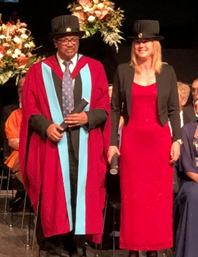
Through her work at the SAMRC, she leads multidisciplinary international collaborations, is an Associate Editor for a top-ranking diabetes journal, is often an invited speaker at international conferences, has authored numerous high-impact scientific publications and contributes to capacity development within South Africa. She was awarded an Honorary Doctorate (Doctor Honoris Causa) by Umeå University in recognition of her influence in diabetes research.
| What inspired your career in studying NCDs in African populations? |
| Africa carries a rapidly growing burden of NCDs, yet the underlying biology is often poorly understood because most global research focuses on non-African populations. My postgraduate training in nutrition and dietetics and exercise physiology provided a strong interdisciplinary foundation to integrate clinical, physiological, and epidemiological approaches to understand the mechanisms underlying NCD risk in African populations, and ultimately contribute to more effective, population-specific prevention and treatment strategies. |
| Why is it important to study type 2 diabetes in African populations? |
| Africa has the highest projected rate of increase in type 2 diabetes globally. Our research has shown that the pathophysiology of type 2 diabetes in Africans differs markedly from that in people of European ancestry. These differences have profound implications for screening, diagnosis and treatment. By characterising these unique mechanisms, we can improve early detection, tailor interventions, and ultimately prevent diabetes more effectively in African communities. |
| Some personal information |
| I am married to James Brown, also a researcher, but in head injuries in rugby. I have twin sons, Siya and Bongi, who are 8 years old. I enjoy running, playing squash and doing yoga. |