
Prof Zandile J Mchiza
Chief Specialist Scientist
Non-Communicable Disease Research Unit (NCDRU)
 Professor Zandile J. Mchiza is a Chief Specialist Scientist at the South African Medical Research Council (SAMRC) and an Extraordinary Professor in the School of Public Health at the University of the Western Cape. She has extensive expertise in food security and nutrition epidemiology and has authored over 100 peer-reviewed publications, contributing to numerous policy documents.
At SAMRC, she leads the research subprogram on “Epidemiology of non-communicable diseases and priority nutrition-related paediatric cardiometabolic disorders” and spearheads the international collaborative project, “Food Environments in South Africa: Addressing Malnutrition Using a Syndemic Approach (Food-SAMSA)”
|
“South African children are particularly vulnerable to unhealthy food environments. SAMRC research helps identify environmental drivers of poor nutrition, enabling targeted actions that protect children from early exposure to risk factors associated with obesity, diabetes, and cardiovascular diseases” |
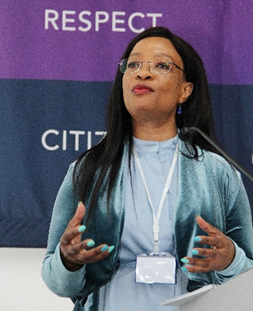 As one of the project’s principal investigators, she focuses on understanding and addressing the community-level determinants of the double burden of malnutrition. Her work includes assessing school- and community-level food environments, outdoor food and beverage advertising, and the offerings of both formal and informal food vendors across South Africa. Prof Mchiza is also actively engaged in research that informs policies influencing dietary behaviors in both the public and private food sectors. She contributed to the recent SAMRC report, Inside Our Food Environments South Africa 2025: Assessing Company Commitments and Practices for Supporting Healthier Food Environments and Improving Population Nutrition.
| What inspired your career in non-communicable disease research? |
| My career in NCD research was inspired by seeing the growing impact of conditions such as cardiovascular disease, diabetes, and cancer on individuals, families, and health systems. I became particularly interested in how many of these diseases are preventable through changes in lifestyle, environment, and public health policies. This realization motivated me to pursue research that can help identify risk factors, improve prevention strategies, and support evidence-based interventions. I am especially driven by the opportunity to contribute to research that reduces health disparities and improves long-term health outcomes in communities most affected by NCDs. |
| Why is non communicable disease research important for South Africa? |
| NCD research is critical in South Africa, where conditions such as Cardiovascular Disease, Type 2 Diabetes, Cancer, and Chronic Respiratory Disease account for a growing share of mortality and place increasing pressure on the health system and economy. The country faces a dual burden of disease, with persistent infectious diseases such as HIV/AIDS and Tuberculosis alongside rapidly rising NCDs. Research is essential for identifying key risk factors including unhealthy diets, physical inactivity, tobacco use, harmful alcohol consumption, and obesity and for informing evidence-based policies and interventions. It also helps uncover social and environmental determinants that disproportionately affect low-income communities and guides strategies to reduce health inequalities. Ultimately, NCD research provides the evidence needed to support prevention, reduce economic burden, and strengthen a sustainable health system in South Africa. |