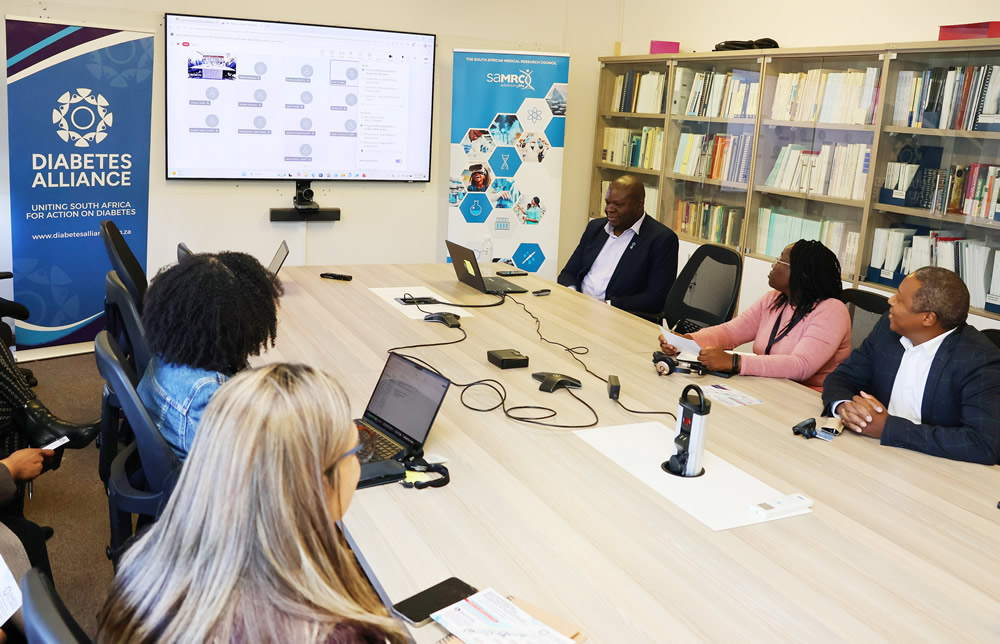
South Africa is facing a growing diabetes crisis that demands urgent, coordinated action from government, researchers, healthcare providers, civil society and communities, according to Dr Patrick Ngassa Piotie, Chairperson of the Diabetes Alliance and Co-founder of the University of Pretoria Diabetes Research Centre, during a recent South African Medical Research Council (SAMRC) President and CEO Lecture.
Presenting a lecture titled "From Declaration to Action: The Role of the SAMRC in Addressing South Africa's Diabetes Crisis," Dr Ngassa Piotie outlined the alarming scale of diabetes in South Africa and highlighted opportunities for the SAMRC to lead research, innovation and accountability efforts aimed at reversing current trends.
Opening his presentation, Dr Ngassa Piotie referenced a 2023 Lancet publication which described diabetes as a defining disease of the 21st century.
“How the health community, and I might add the research community, deals with diabetes in the next two decades will shape population health and life expectancy for the next 80 years,” he said.
According to Dr Ngassa Piotie, South Africa is experiencing many of the challenges driving diabetes across Africa, including rapid urbanisation, changing food environments, ageing populations and health systems that were historically designed to address infectious diseases rather than chronic conditions.
He highlighted concerning projections showing that diabetes cases in Africa are expected to increase significantly by 2050, while an estimated 73% of people living with diabetes remain undiagnosed. Complications such as amputations, kidney disease and stroke continue to place a substantial burden on individuals, families and the healthcare system.
“Diabetes is now the leading cause of death in South Africa,” Dr Piotie noted, citing Statistics South Africa data showing that more than 32 000 deaths were attributed to the disease in 2022 alone.
A key focus of the lecture was the Johannesburg Declaration on Diabetes, adopted following the 2025 Diabetes Summit and endorsed by 25 organisations representing people living with diabetes, researchers, healthcare professionals and civil society groups. The declaration calls for diabetes to be recognised as a national public health crisis and advocates for a whole-of-society and whole-of-government response led from the Presidency.
Dr Ngassa Piotie identified several strategic opportunities for the SAMRC to contribute to this response, including the development of a national diabetes research agenda, establishment of a national diabetes registry, strengthening disease surveillance and advancing implementation science to bridge the gap between policy and impact.
“We need to have a national diabetes research agenda. We need to know what our roadmap is and what we are trying to achieve over the next decade,” he said.
He also highlighted the potential of the National Health Laboratory Service's HbA1c Dashboard, which provides near-real-time monitoring of diabetes control nationwide. The platform provides researchers, health managers, and clinicians in the public healthcare sector with access to national, provincial, district, and facility-level data, enabling earlier identification of high-risk patients and more targeted interventions.
Beyond surveillance, Dr Ngassa Piotie called for a transformation of diabetes care, arguing that South Africa's current public-sector treatment model is outdated and overly focused on managing complications rather than preventing them.
“We need to move from a one-size-fits-all approach to person-centred care that prioritises prevention, equity and better health outcomes,” he said.
The lecture also explored opportunities for innovation, including the use of artificial intelligence, community-led research, improved monitoring technologies and locally developed solutions tailored to African populations.
Closing the lecture, Dr Piotie challenged stakeholders to view the diabetes crisis as a defining opportunity for leadership and transformation.
“South Africa stands at a crossroads. Diabetes is now the leading cause of death, yet this crisis also presents a once-in-a-generation opportunity to transform how we prevent, diagnose, treat and live with diabetes. Beyond this crisis lies a leadership opportunity, a legacy moment. It is our duty to act in South Africa's best interests. It is our calling to inspire Africa.”
SAMRC President and CEO, Prof Ntobeko Ntusi, welcomed the call to action and expressed confidence that meaningful collaborations between the SAMRC, the Diabetes Alliance and other partners could help drive progress in addressing one of South Africa's most pressing health challenges.
Click here to watch the presentation by Dr Patrick Ngassa Piotie.