Clinical trials are a cornerstone of modern healthcare. When conducted rigorously and ethically, they generate evidence that improves clinical practice, informs health policy, and ultimately strengthens trust between health systems, communities, and patients. At their best, clinical trials are not separate from care but embedded within, advancing the idea that research is care, and that high-quality evidence generation is essential to better health outcomes and underpins resilient health systems.
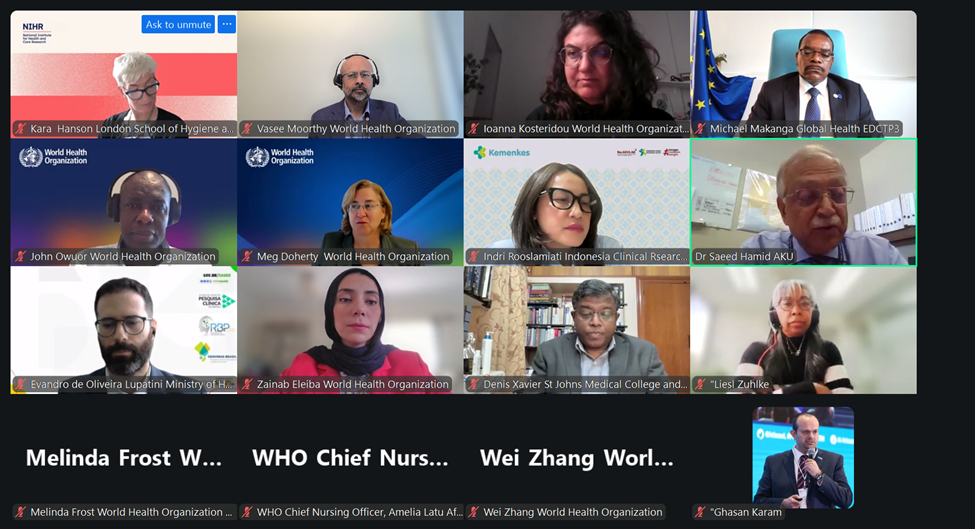
This message was strongly reflected during a recent World Health Organization (WHO) webinar on the 4th of May 2026, marking the official launch of a new global online training course on ‘Good Practices for Clinical Trial Design, Implementation and Reporting’. Hosted by the WHO Academy, the course is grounded in the WHO Guidance for Best Practices for Clinical Trials published in 2024 and represents the first globally endorsed, principles-based guidance designed explicitly from a public health and clinical practice perspective.
The South African Medical Research Council’s (SAMRC) Vice-President Extramural Research and Intramural Portfolio, Prof Liesl Zühlke, participated in a panel discussion offering a national funder’s perspective from the African continent. She highlighted the important role that public research funders play in strengthening public trust, aligning trials with local health priorities, and building sustainable national research capacity.
Speaking during the webinar, Prof Zühlke emphasised that trust in science is built through conduct, not only through results, but through how research is designed, experienced, and governed. Drawing on SAMRC’s role as South Africa’s national public health research institution, she highlighted how ethical stewardship, transparency, and sustained investment in people and institutions are essential to ensuring that clinical trials deliver both scientific value and public good. “When clinical trials are aligned with national health priorities, conducted ethically and transparently, and embedded within routine care, they strengthen trust in science while building lasting research capacity that benefits communities long after individual studies end”, said Prof Zühlke.
The SAMRC supports a large and diverse portfolio of clinical trials across priority health areas such as HIV, tuberculosis, non-communicable diseases, as well as maternal and child health. Beyond funding research, the organisation plays a critical enabling role in the regional and global clinical trials ecosystem, including hosting the WHO‑recognised Pan African Clinical Trials Registry (PACTR) and the South African National Clinical Trial Register (SANCTR). Through these efforts, the SAMRC actively contributes to improving research quality, accountability, reducing research waste and building public confidence in health research.
Developed through global collaboration and hosted on the WHO Academy’s digital learning platform, the newly launched course directly supports strengthening workforce capacity across health systems and aims to demystify clinical trials for a wide audience, including clinical trial staff, healthcare professionals involved in research, data managers and statisticians, ethics committee members, regulators, auditors, and research funders. It highlights five core scientific and ethical principles that underpin high-quality research, including scientific integrity, participant protection, meaningful community engagement, inclusivity, and relevance to local contexts. By focusing on real‑world decision‑making and pragmatic trials embedded in healthcare, the training promotes a people and community‑centred approach to research.
The course is free to access, provides confirmation of completion, and is designed to support peer‑to‑peer learning through a course ambassador model. By making this training openly accessible, the aim is to ensure that researchers and health professionals regardless of geography or institutional resources can apply shared global standards and contribute confidently to ethical, high‑quality clinical research. This approach aligns with WHO’s broader commitment to advancing equity, strengthening health and care workforces, and SAMRC’s mandate of improving the health and well-being of the people of our country.
Read more about or Enroll for the WHO Clinical Trials training course | HERE