SAMRC RCD Division Shares Lessons from a Decade of Strengthening Health Research Capacity at Historically Disadvantaged Institutions at SARIMA 2026
The South African Medical Research Council (SAMRC) Division of Research Capacity Development (RCD) shared lessons from a decade of strengthening health research capacity at Historically Disadvantaged Institutions (HDIs) during the 2026 Southern African Research and Innovation Management Association (SARIMA) Conference, held at the NH Hotel in Sandton, South Africa, from 8 to 11 September 2026.
Under the theme "Resilient Futures: Reimagining Research and Innovation Management for Impact and Inclusion," the conference provided a valuable platform to demonstrate how sustained investment in researchers, research teams and institutional systems can contribute to a stronger, more equitable and impactful health research ecosystem.
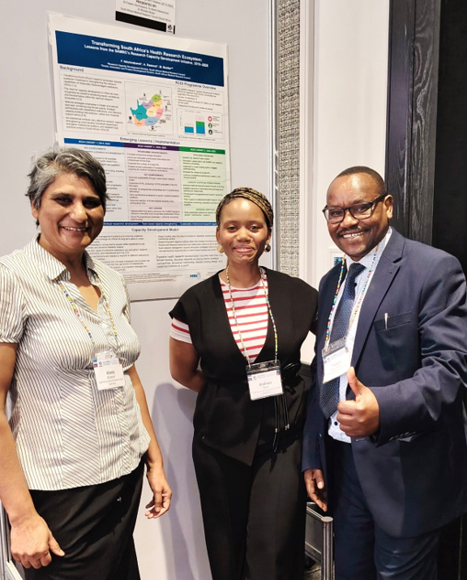
Dr Frederic Nduhirabandi, RCD Programme Manager, Dr Abeda Dawood, RCD Division Manager, and Dr Michelle Mulder, Executive Director of the SAMRC Grants, Innovation and Product Development (GIPD) Division, presented a peer-reviewed poster entitled, "Transforming South Africa's Health Research Ecosystem: Lessons from the SAMRC's Research Capacity Development Initiative (RCDI), 2015–2025."
The poster outlines lessons from a decade of SAMRC support for researcher development and institutional capacity strengthening at HDIs.
The study findings, which are being developed into a peer-reviewed publication, offer valuable insights for funders and universities seeking more equitable and sustainable approaches to research capacity development. The lessons learned demonstrated that strengthening research capacity requires more than a financial investment in individual researchers; it also depends on strong institutional systems and support structures.
Reflecting on their findings, Dr Nduhirabandi emphasised the critical role of research and innovation management in enabling research excellence and impact. "The contribution of research and innovation management professionals extends beyond administrative support to encompass research development, governance, capacity strengthening, partnership facilitation, resource mobilisation, knowledge translation and stakeholder engagement and implementation. Through these interconnected functions, they help create the enabling environment required for research to generate scientific, policy and societal impact."
Further emphasising the strong participation of SAMRC, Dr Frederic Nduhirabandi was invited to participate in the panel discussion on Pracademia, which explored the intersection of professional practice and academic scholarship. The discussion highlighted the growing recognition of research and innovation management as a profession and examined how practice and research can inform one another, contribute to knowledge generation and support continued professionalisation. The panel also focused on the importance of integrating practice and scholarship and fostering knowledge exchange across the region.
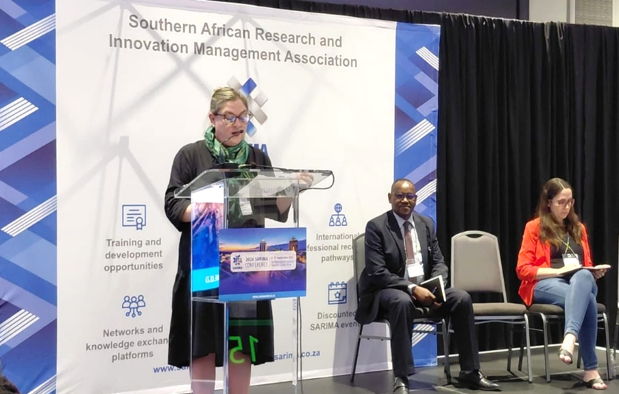
The RCD delegation also included Ms Andiswa Nene, RCD Project Coordinator, who participated in a range of sessions on emerging trends and practices in research and innovation management. These engagements facilitated knowledge exchange, exposure to emerging developments and meaningful interaction with research management professionals from across southern Africa and other regions of the world, enriching discussions on the evolving research and innovation management landscape.
Reflecting on the conference, Dr Abeda Dawood noted the breadth of discussions addressing current challenges and opportunities in research and innovation management. "SARIMA 2026 provided a valuable platform for exchanging ideas, sharing experiences and engaging with the evolving research and innovation management landscape in the era of artificial intelligence. The conference fostered local, regional and international collaboration, and reinforced the importance of continuous learning and strong institutional systems in supporting research excellence and impact, while highlighting the value of sharing practical lessons that can strengthen the broader research ecosystem."
The RCD division's contributions at SARIMA 2026 underscored the value of sharing institutional experience, engaging with peers and contributing to professional dialogue. By presenting lessons from a decade of research capacity development, the SAMRC reaffirmed its commitment to strengthening South Africa's health research ecosystem and advancing equitable research capacity development across the region.
Written by Frederic Nduhirabandi