The 17th Early Career Scientist Convention Highlights
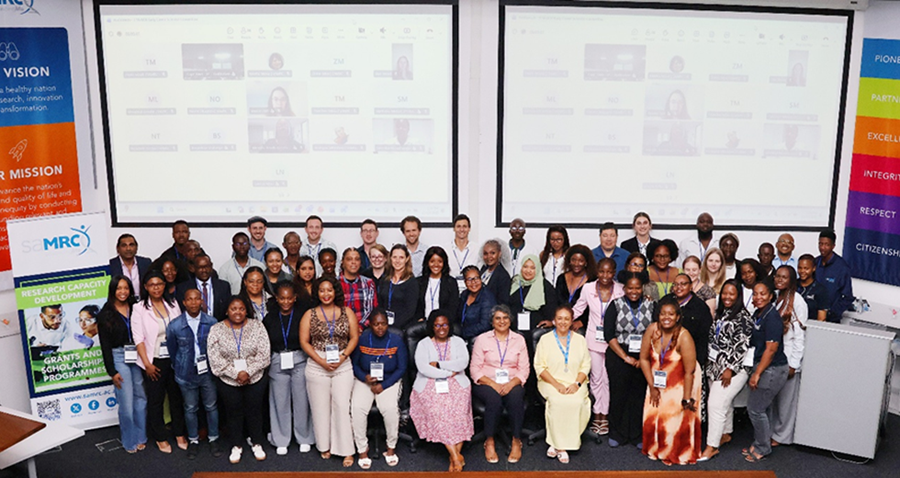
Attendees at the 17th Early Career Scientist Convention. See more images from the convention here 🔗
The SAMRC’s Division of Research Capacity Development (RCD) held its 17th Early Career Scientist Convention (ECSC) at the SAMRC Conference Centre at its Medicina Campus, Cape Town, on the 19th and 20th of November 2025. Under the theme “Empowering Emerging Researchers to Navigate Complexity and Drive Real World Impact”, RCD’s Division Manager, Dr Abeda Dawood kicked off the convention by driving the theme of impact, reminding early-career researchers that real change happens across four levels: individual, institutional, societal and knowledge.
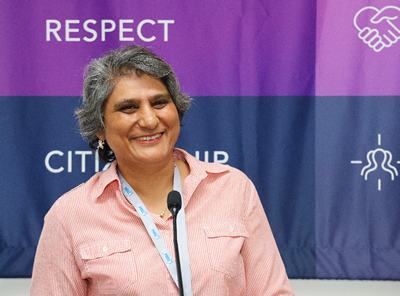
Dr Abeda Dawood, Research Capacity Development Division Manager
In her opening address, RCD’s executive director, Dr Michelle Mulder, challenged the scholars to upskill themselves continuously, conduct research with the highest standards and integrity, and uphold the strongest ethical principles. She stressed that researchers need a wide range of skills beyond basic method such as understanding research approaches, developing protocols and ethics proposals, managing and analyzing data, and communicating findings through writing grant proposals, reports, and publications. These competencies are built through training, hands-on experience, mentorship, and learning from peers. She highlighted the value of guidance from supervisors and diverse insights from colleagues, as well as the importance of adapting to rapidly evolving technologies and research trends. She emphasized that every aspect of research should be driven by impact, consistently answering: So what? Why does this research matter, and how will it improve health services, products, policies, or practices?
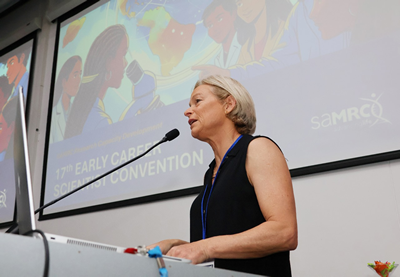
Dr Michelle Mulder, Research Capacity Development Executive Director
The convention examined how collaboration and resilience can shape the future of health research in South Africa and beyond. Critical topics that are shaping the future of health research were explored including resilience in global funding, AI in research, collaborative innovation, and translating science into societal impact. The insights shared reaffirmed the importance of partnerships and adaptability in driving meaningful change.
In his keynote address, Professor Thumbi Ndung’u shared insights from his cohort-based studies investigating mechanisms of HIV-1 immune control that could inform vaccine development. He highlighted the Females Rising through Support, Education and Health (FRESH) cohort, which adopts a unique approach by integrating basic science research with socio-economic empowerment. The programme delivers intensive HIV-1 prevention services alongside career and life-skills training to tackle challenges such as high school drop-out rates, gender-based violence, and economic hardship among young women. Findings from this study are significant as they pave the way for improved HIV cure strategies and future treatments, while demonstrating that complex HIV research can be successfully conducted in resource-limited settings where the need is greatest. To inspire students, Professor Ndung’u also shared his personal journey—from rural Kenya to Harvard—and his rise to becoming one of South Africa’s leading HIV researchers.
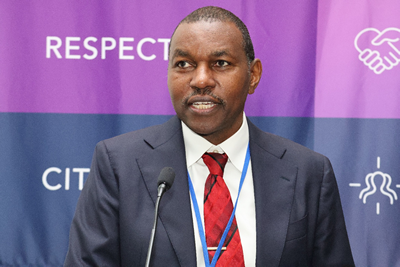
Professor Thumbi Ndung'u delivering his keynote address at the 17th ECSC
On collaboration, Professor Landon Myer encouraged young scientists to embrace creativity, interdisciplinary thinking, and risk-taking, highlighting age as an asset for bold ideas. Using disease classification like communicable vs. non-communicable diseases, Prof Myer showed how traditional boundaries are artificial and increasingly blurred. He further warned against being confined by disciplinary silos or methods, urging researchers to focus on questions, explore heterogeneity, and collaborate across fields. Above all, he emphasized that being wrong is a vital part of learning and innovation in science.
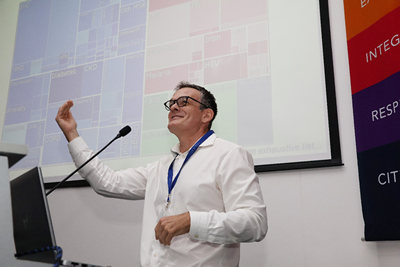
Professor Landon Myer delivering his plenary talk at the 17th ECSC
From the thought-provoking keynote addresses delivered by Professor Ntobeko Ntusi and Professor Thumbi Ndung’u to the insightful plenary sessions and masterclasses featuring speakers from academia, government, philanthropic organisations and private sector the programme offered rich perspectives on the evolving research landscape. The sessions provided practical guidance on career development, navigating global funding challenges, and the value of responsible data visitation in strengthening research integrity and achieving research impact. This convention was a powerful reminder that impactful research is built on strong partnerships, shared learning, and adaptability.
Congratulations to our 17th ECSC winners: Dr Usha Lalla (Best Flash Talk), Dr Cascia Day (Best Oral Presentation PhD category), and Ms Thembelihle Dladla (Best Submitted Abstract and Oral Presentation MSc category). We celebrate your hard work, dedication, and commitment to advancing health research. Thank you for inspiring your peers and demonstrating the impact that emerging researchers can achieve.
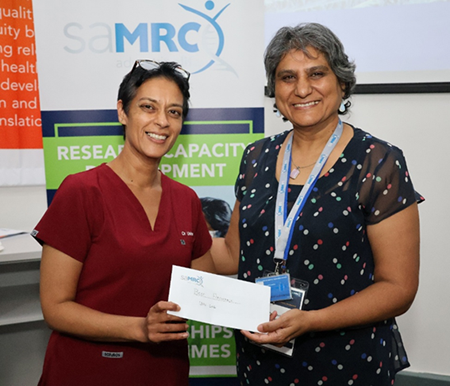
Best Flash Talk winner, Dr Usha Lalla, Clinician Researcher Development Programme beneficiary, from Stellenbosch University, with RCD Divisional Manager, Dr Abeda Dawood.
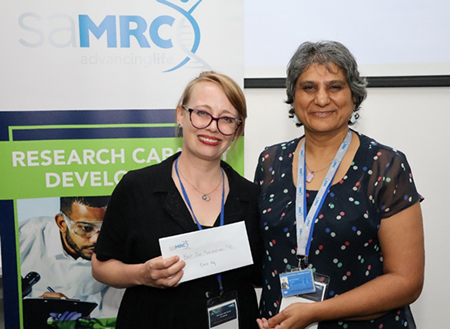
Best Oral Presentation winner - PhD, Dr Cascia Day, Clinician Researcher Development Programme beneficiary, from the University of Cape Town, with RCD Divisional Manager, Dr Abeda Dawood
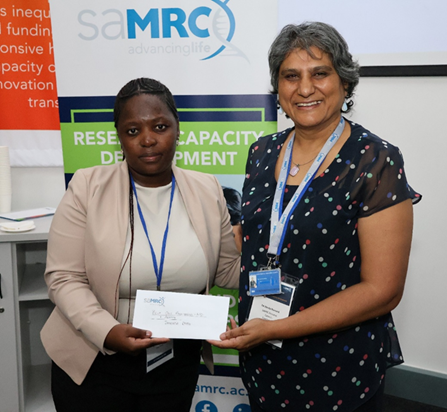
Best Oral Presentation & Abstract winner - MSc, Ms Thembelihle Dladla, Biostatistics Capacity Development Initiative beneficiary, with RCD Divisional Manager, Dr Abeda Dawood
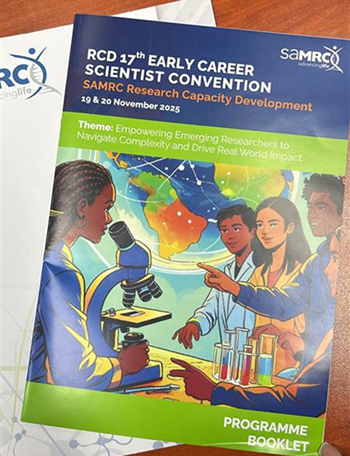
The 17th ECSC Programme Booklet
The success of this gathering was due to the dedication and hard work of the speakers, programme director, session chairs, facilitators, evaluators, and emerging researchers who made this gathering a success. A special thank you goes to our Sponsors, Discovery, for their generous support.
