
UNIZULU Research Postgraduate Imbizo 2026: a space for reflection, motivation, and empowerment
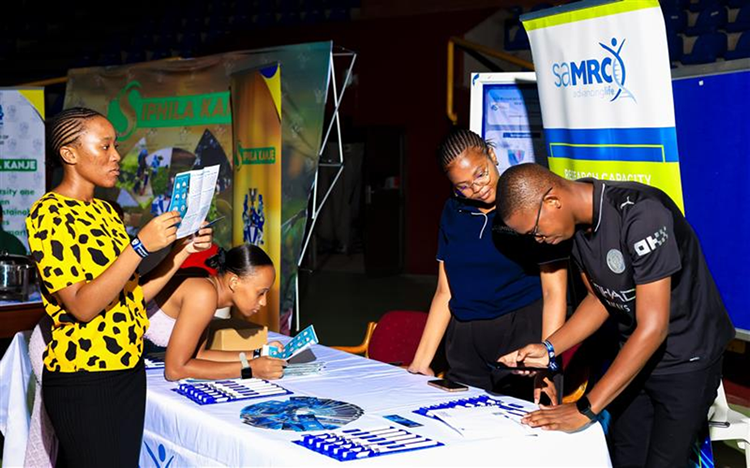
Engagement with postgraduate students at the SAMRC exhibition stand
On 20 March 2026 the University of Zululand’s (UNIZULU) office of Research and Innovation hosted the Research Postgraduate Imbizo 2026 at the Empangeni Campus. The gathering brought together postgraduate students, research funders, and research staff under the theme of “Thriving, Not Just Surviving: What It Takes to Succeed as a Postgraduate Researcher in South Africa”. The event served as a platform to equip students with tools, knowledge, and strategies to navigate their academic journeys, while also fostering engagement and shared learning. The South African Medical Research Council’s (SAMRC) Division of Research Capacity Development (RCD) had the honour of participating in this event.
The Imbizo also highlighted the long-term impact of sustained investment in research. Reference was made to the SAMRC’s targeted approach to funding where previously funded scholars from UNIZULU are advancing into supervisory roles and contributing to the development of the next generation of researchers – demonstrating the long-term impact of RCD’s funding programmes. This is exemplified by Dr Nokulunga Hlengwa, the Acting HOD of the Biochemistry Department who was previously funded under the Internship Scholarship Programme (now Postgraduate Research Associate Scholarship Programme). Dr Hlengwa, then was appointed a lecturer at UNIZULU, and became a beneficiary under the SAMRC Research Capacity Development Initiative (RCDI) as a Principal Investigator, supervising a postdoctoral fellow and a PhD student both funded under the SAMRC RCDI programme. Another example is Dr Nkosinathi Cele previously funded under the SAMRC RCDI-Postdoc Fellowship and then progressing to the next stage where he is one of two researchers at UNIZULU funded under the SAMRC Early Investigators Programme.
A recurring theme throughout the engagement was intentionality. Students were encouraged to dream, but also to critically reflect on the context of their lives and the motivations behind their academic pursuits. This alignment between purpose and study was framed as essential for resilience and success in the often demanding postgraduate journey.
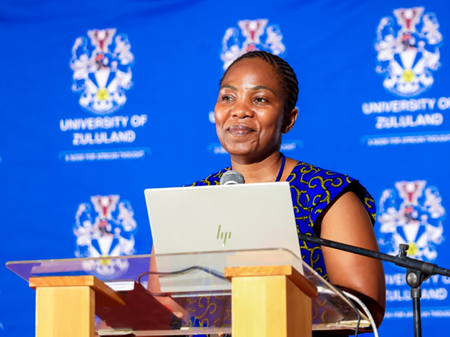
Dr Ndlandla (RCD Scholarships Programme Manager) addressing attendees at theUNIZULU Research Postgraduate Imbizo 2026
Adding to the discussions, Dr Lindokuhle Ndlandla (RCD Scholarships Programme Manager) shared reflections from her own PhD journey. She candidly noted that “great things come to those with funding” highlighting how financial support not only enables academic progress but also opens doors to networking opportunities, collaborations, and the development of transferable skills. Her insights underscored the importance of building relationships within academic spaces. Equally significant was her guidance on the student-supervisor relationship, an often overlooked but critical factor in postgraduate success. She outlined three key practices: maintaining clear and consistent communication (including structured agendas for meetings), being thoughtful and intentional in academic enquiries, and embracing constructive criticism as a tool for growth. Her closing advice, “master your environment,” resonated as a call for students to take ownership of their academic spaces and experiences.
At its core, the Imbizo underscored the critical role postgraduate students play in strengthening research capacity. Attendees were challenged to reconsider the state of research in South Africa, describing the gap in researchers not as a minor issue, but as a structural crisis. It was emphasized that research capacity development is fundamental to a country’s ability to generate solutions to its own challenges through its own processes. In this regard, postgraduate students are not merely participants in academia, but they are the engine driving capacity. Research is not conducted in isolation but within a broader ecosystem of support, collaboration, and purpose.
Written by: Lerato Hlatshwayo
Edited by: Dr Abeda Dawood and Deney Christians