Impact Evaluation of a Combination HIV Prevention Intervention for Adolescent Girls and Young Women in South Africa: A Non-Randomised Controlled Cluster Trial
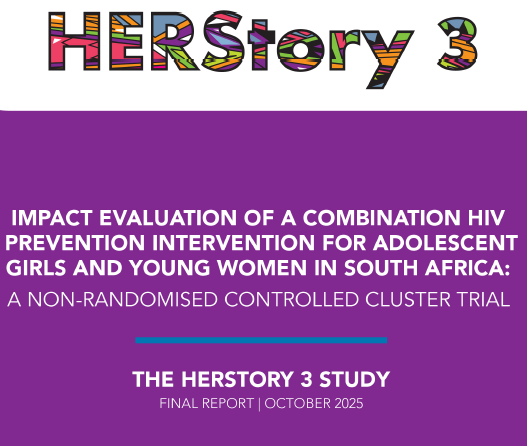
Impact Evaluation of a Combination HIV Prevention Intervention for Adolescent Girls and Young Women in South Africa: A Non-Randomised Controlled Cluster Trial
Executive summary
Introduction
In South Africa, adolescent girls and young women (AGYW) are at high risk of HIV infection, and there has been insufficient progress in preventing HIV infection among this population. Multiple factors intersect to increase AGYW’s risk of HIV, these include, but are not limited to gender inequalities, age-disparate relationships, gender- based violence (GBV), low levels of education, lack of access to adequate sexual and reproductive health (SRH) services and stigma and discrimination. These factors serve as barriers to young women’s ability to protect themselves from HIV or to effectively treat HIV. To alleviate the HIV burden among AGYW, the Global Fund to Fight AIDS, TB and Malaria has invested in a combination HIV prevention intervention for AGYW, now called the My Journey Programme. This programme was implemented in South Africa from 2016 through to 2024, the time of writing this report. Combination HIV prevention interventions, which merge effective biomedical, behavioural and structural interventions for combined delivery, are one of the key strategies for reaching the 95-95-95 targets and achieving the Sustainable Development Goals (SDGs) of ending the HIV epidemic by 2030.
The Programme was implemented by three Principal Recipients (PRs): AIDS Foundation of South Africa (AFSA), Beyond Zero, and Networking HIV/AIDS Community of Southern Africa (NACOSA). The PRs contracted sub-recipients (SRs) to implement the intervention components. The aim of the combination intervention is to accelerate prevention efforts to reduce new HIV, STIs and TB infections among AGYW with specific objectives to reduce HIV incidence, teenage pregnancy, and GBV, and to increase retention in school and access to economic opportunities. AGYW were introduced to the Programme through several entry points and referred for services via two main components called the “Core Service” (which was usually but not always received first) and “Layered Services”, which were additional services that were provided based on the needs of the beneficiary and were received over time. Core and layered services were delivered by funded SRs in schools, TVET colleges, dedicated safe spaces in communities, and mobile clinics that delivered clinical HIV and SRH related services. Layered services were categorised into biomedical, behavioural and structural services, while core services included enrolment and consent, HIV risk and vulnerability assessment, and a service plan.
The South African Medical Research Council was contracted to evaluate the impact of the My Journey Programme. It is worth noting that it is rare to evaluate combination HIV prevention interventions on such a large scale and this evaluation is one of the few that have been conducted. Such large-scale evaluations are critical as they provide vital information on how well the combination HIV prevention intervention strategies might work for countries with large HIV epidemics and persistent trends in key populations that are hard to tackle using any single method of intervention.
View or download the complete HERStory 3 Report: Impact Evaluation of a Combination HIV Prevention Intervention for Adolescent Girls and Young Women in South Africa: A Non-Randomised Controlled Cluster Trial.