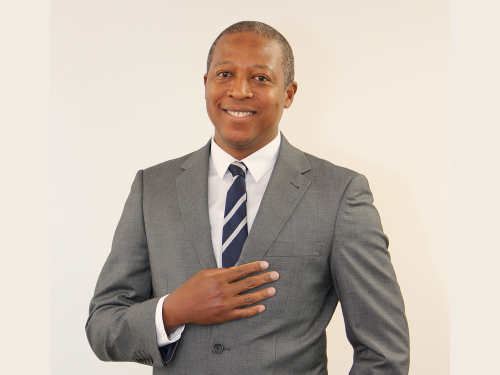
Cuts to United States funding of health research could have “catastrophic” consequences, says Professor Ntobeko Ntusi, who is at the helm of the country’s primary health research funder. He says the South African Medical Research Council is “heavily exposed” to the cuts, with around 28% of its budget coming from US federal agencies.
 No country can achieve sustainable development without building capacity in science and technology. So, there’s a need to reinforce science education, to train a critical mass of researchers, and to create research infrastructure that facilitate an environment where innovation can thrive.
On 20 February 2025, The South African Medical Research Council (SAMRC) will, on Thursday 20 February 2025, host its 11th Scientific Merit Awards to celebrate some of the finest scientific minds in health research.
 A South African Medical Research Council (SAMRC) - led qualitative study recently published in PLOS ONE reports on the performance of Quality Improvement (QI) teams working in maternal and neonatal health in South Africa. The qualitative study was part of a mixed-methods evaluation of the effectiveness of the Mphatlalatsane Project, which sought to reduce maternal and neonatal deaths and stillbirths, improve mothers’ experience of care, and strengthen health services.
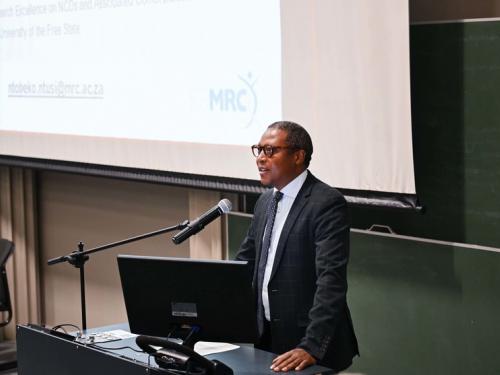
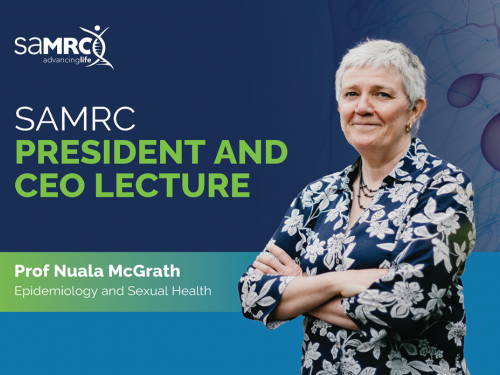 On the 20th of November, SAMRC President and CEO, Prof Ntobeko Ntusi hosted a lecture at the Medicina campus in Cape Town. The event was opened by Prof Ntusi, who welcomed and introduced the speaker, Prof Nuala McGrath who presented “Diabetes Together: a couples-focused intervention to support self-management of Type 2 Diabetes in South Africa”.