
SAMRC warns South Africans to stay safe from the heat this festive season
As South Africans head into the festive season and probably spending more time outdoors in the sun, the South African Medical Research Council (SAMRC) warns the public to take precautions against heat-related illnesses during the festive season, especially vulnerable groups, amid rising temperatures linked to climate change. The SAMRC highlights the importance of community-wide resilience and awareness to protect health as extreme heat becomes more frequent and severe.
The warning comes amid rising temperatures linked to climate change, with some parts of the country already recording high temperatures.
Complementing ongoing research on the health impacts of extreme heat across Africa, SAMRC’s Environment and Health Research Unit (EHRU) recently conducted a study in Limpopo to better understand household heat resilience.
The study, published in the South African Journal of Psychology, assessed how 406 households coped as temperatures exceeded 40°C outdoors and 36°C indoors.
Most households reported that their homes became “too hot” during heatwaves. In response, residents relied heavily on recommended heat-health actions such as sitting outside in the shade, opening windows for ventilation, and reducing physical activity.
“Resilience to extreme heat as a result of climate change requires more than personal action,” says Professor Caradee Wright, Chief Specialist Scientist at the SAMRC. “In light of the climate threats and climate-related disaster risks facing South Africa, an all-encompassing approach that support resilient coping, is urgently required.”
The study also found that preparedness and resilience are crucial as South Africa is expected to warm at rates higher than global averages. Some regions will become drier, others wetter and the unpredictability of future extreme temperatures pose a significant public health challenge.
“With temperatures rising and heatwaves becoming more frequent, we must protect one another. The festive season should be safe for everyone but that requires awareness and action,” says Professor Wright.

The SAMRC has warned that the following groups are most at risk of severe illness or death during extreme heat:
- Babies and young children
- Older persons
- Pregnant women
- Persons with disabilities
- People on chronic medication
- Workers exposed to outdoor heat
- Commuters spending long periods inside taxis, buses or cars
To support national resilience and public awareness, SAMRC is implementing several heat-health interventions. Among these is a collaborative project with the taxi industry, aimed at educating drivers, operators and commuters about heat risks inside vehicles, where temperatures can rise much higher than outdoors. Cars, buses and taxis can quickly become dangerous, especially for babies, children, and older people.
The public is urged never to leave a baby, child, older person or pet inside a parked vehicle, even for a short time.
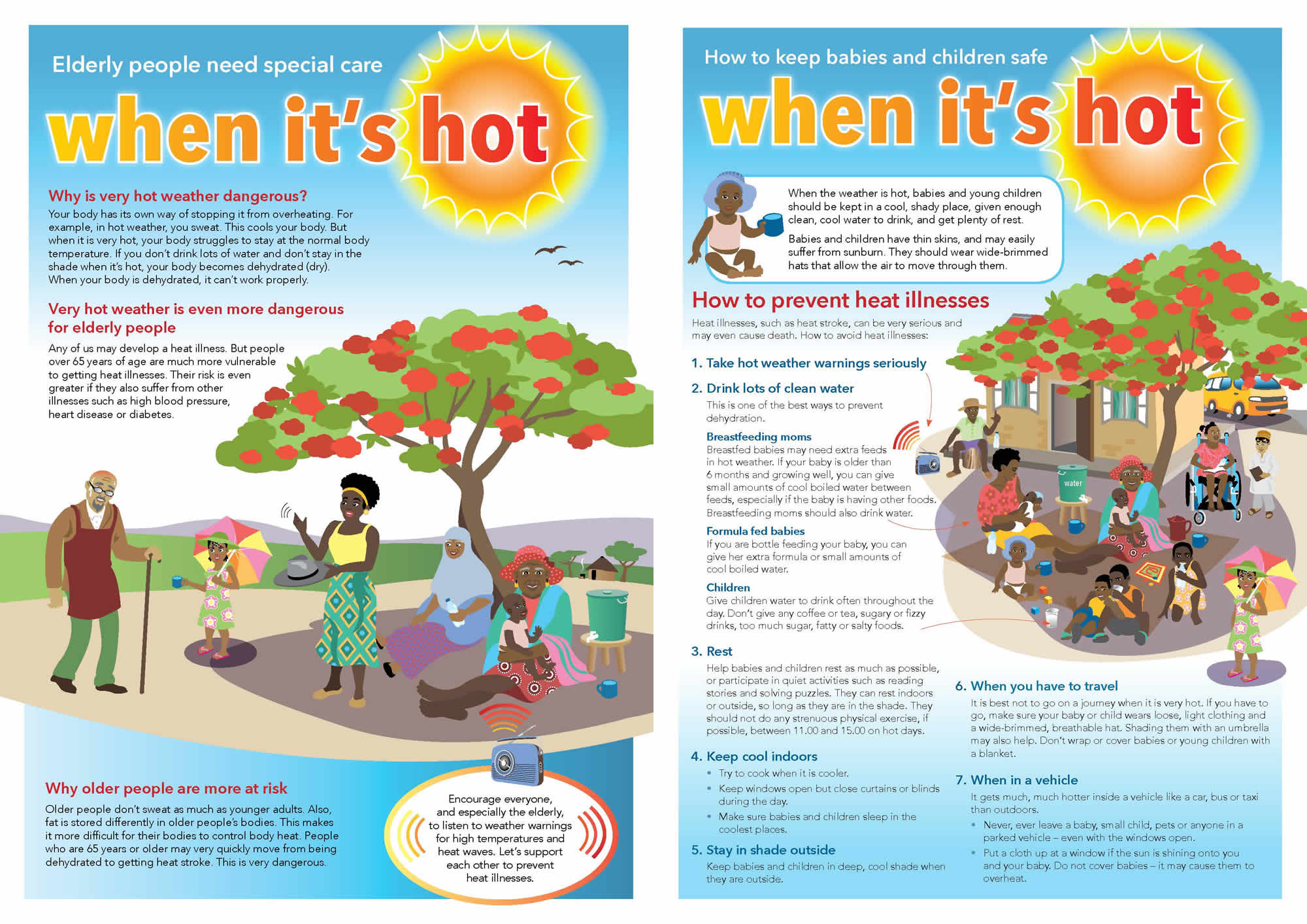
How to stay safe during extreme heat.
- Take heat warnings seriously
- Monitor weather forecasts and limit outdoor activity during peak heat (11:00–15:00).
- Drink plenty of clean, safe water
- Avoid dehydration by drinking water throughout the day.
- Avoid or limit caffeine, alcohol, sugary drinks, and salty, fatty foods — particularly for infants, children, and elderly persons.
- Breastfed babies may need more feeds, and formula-fed babies can be given small amounts of cooled boiled water between feeds if older than six months.
- Stay in the shade or coolest part of your home
- Keep curtains closed during the day and windows open for ventilation.
- Rest often and avoid strenuous activity.
- Cook during cooler hours.
- Ensure babies and older persons sleep in the coolest areas.
- Dress appropriately
- Wear loose-fitting, lightweight and light-coloured clothing.
- Babies and children should wear breathable, wide-brimmed hats.
- Older persons should avoid heavy or dark clothing.
- Protect babies and children
- Keep them in cool, shady places at all times.
- Never leave a child in a parked vehicle — even for a minute.
- Use umbrellas or sunshades when travelling.
- Prevent heat illnesses
Know the signs of heat exhaustion and heat stroke, including dizziness, confusion, headaches, vomiting, muscle cramps, lack of sweating, and extremely hot skin.
If someone shows signs of heat illness:- Move them to a cool place.
- Remove heavy clothing.
- Offer water if they are conscious.
- Cool the skin with water or a damp cloth.
- Seek medical assistance immediately for severe symptoms