Dr. Duduzile Ndwandwe, Head of Vaccine Implementation Science at the South African Medical Research Council’s (SAMRC) Cochrane South Africa (CSA), recently participated in the WHO Regional Office for Africa (AFRO) immunisation meetings held from 24–27 June 2025 in Kinshasa, Democratic Republic of the Congo. She emphasised the urgent need for stronger partnerships and evidence-based implementation to further immunisation goals across Africa.
 The Honourable Minister of Health, Dr. PA Motsoaledi, invites the public to submit nominations of candidates to be considered for appointment to the Board of the SAMRC for a period of three (3) years, effective from 1 November 2025 to 31 October 2028 as follows: • A Chairperson, Not less than twelve (12) and not more than fourteen (14) members who have distinguished themselves in any branch of the Medical or related Sciences • One (1) candidate with extensive knowledge of law • One (1) candidate with extensive knowledge of economics, financial matters or accounting.
 At the South African Medical Research Council, we celebrate the capacity of collective minds working towards a common goal of improving health for all. To that end the organisation values and builds partnerships with many stakeholders at local, national, regional and international levels. One such example is with the European and Developing Countries Clinical Trials Partnership (EDCTP), which is a partnership between the governments of 15 European and 30 African countries and the European Commission, working together to alleviate the health and economic burden of infectious diseases in Africa.
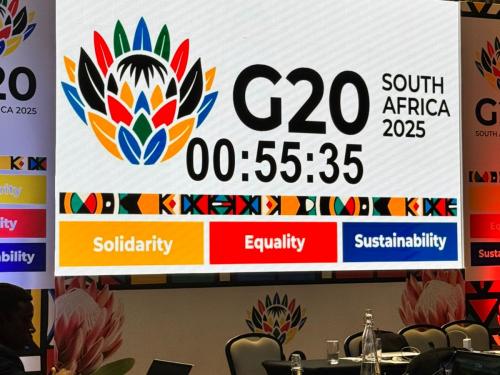 The South African Medical Research Council (SAMRC) participated at the highly anticipated 4th G20 Health Working Group Meeting, taking place from 9 -13 June 2025 at the Melrose Arch, Gauteng, South Africa (SA). Dr Michelle Mulder, Executive Director: Grants, Innovation and Product Development (GIPD) and Director: Office of AIDS and TB (OATB) Prof Fareed Abdullah were distinguished invited speakers for several respective sessions. SAMRC Vice President Liesl Zühlke, a board member of the NCD Alliance spoke on behalf of the NCD Alliance.
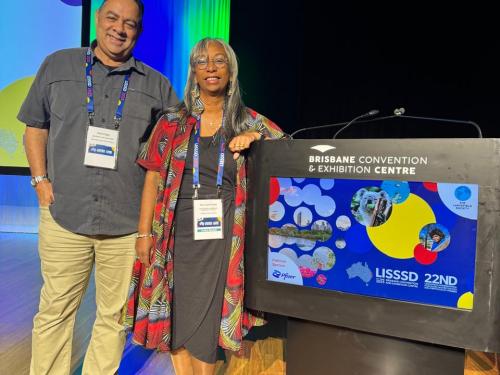 The South African Medical Research Council (SAMRC) continues to cement its position as a global leader in health research, with internationally recognised experts delivering insights on the world stage. At the 22nd Lancefield International Symposium on Streptococci and Streptococcal Diseases (LISSSD) held from 1–5 June 2025 in Brisbane, Australia, SAMRC Vice-President Prof Liesl Zühlke delivered a keynote lecture titled “Rheumatic Heart Disease Interventions for Prevention in Africa: Current Status and Future Priorities.”